Participation for smaller fleets
Understand the routes and constraints of owner-operators and smaller businesses, alongside larger fleets.
Regions & impact
The transition has to work for the independent operators and regional businesses that keep communities supplied.
Where we begin
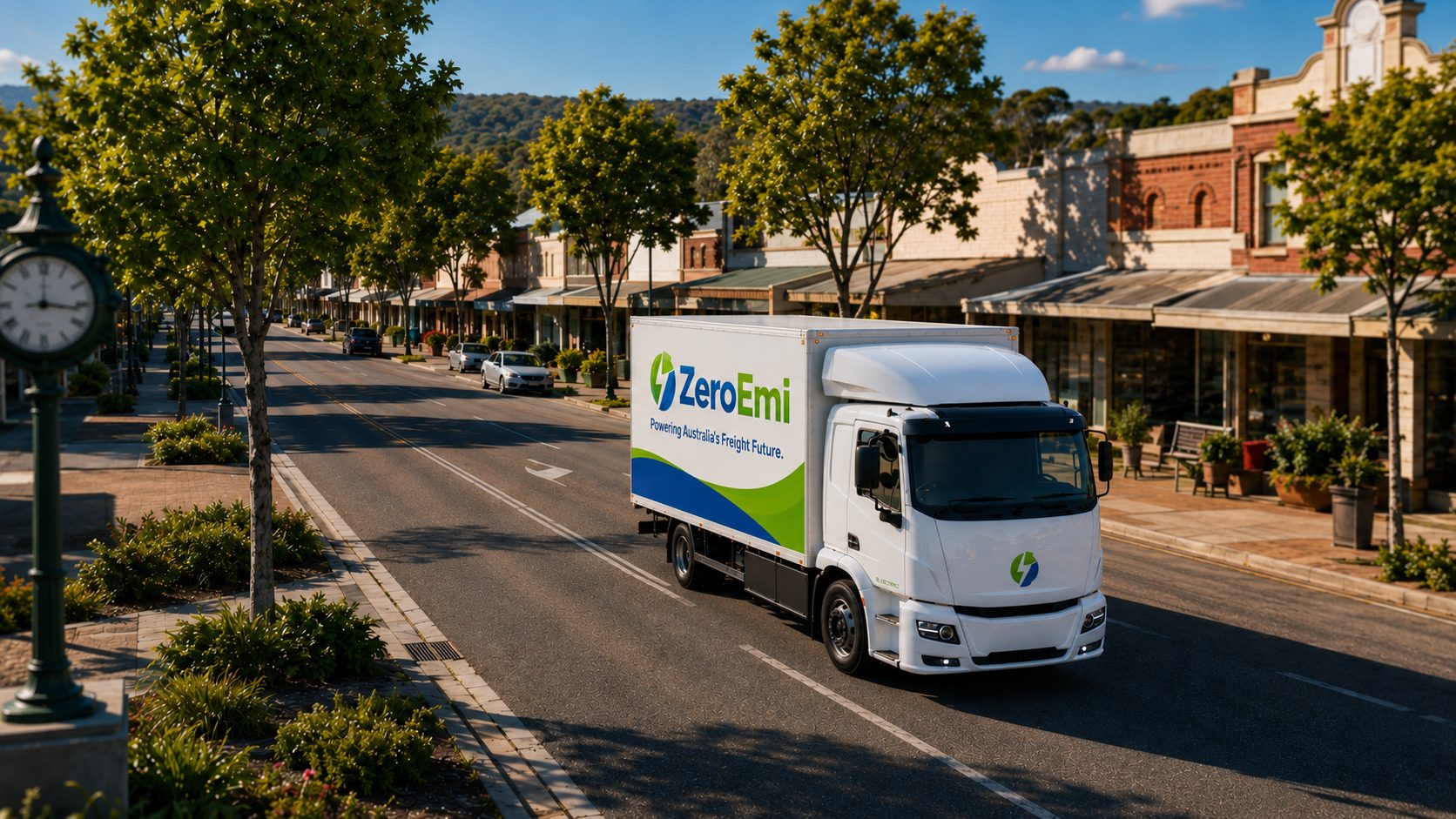
Our starting point is local: understanding the operators, sites and route patterns around the NSW Mid North Coast.
We want regional demand to shape the infrastructure case. Combining the needs of several operators can help reveal where a shared charging service may make sense.
This is a development focus, not a map of operating ZeroEmi chargers. Each location needs its own feasibility and delivery pathway.
What a good regional outcome looks like
Understand the routes and constraints of owner-operators and smaller businesses, alongside larger fleets.
Consider multiple users, local access, energy requirements and the needs of nearby communities.
Include driver familiarisation, charging procedures and service support in project planning.
Evidence, not headlines
These are the measures we propose for transition projects. No achieved savings or fleet outcomes are claimed here.
| What to understand | Evidence to collect | Why it matters |
|---|---|---|
| Operating performance | Distance, payload context, completed work and downtime | Can the electric vehicle perform the work? |
| Energy & charging | Metered kWh, dwell time, charge success and site demand | Does the charging plan work in practice? |
| Cost | Comparable fuel, electricity, maintenance and infrastructure costs | What changed against the baseline? |
| Emissions | Defined boundaries, baseline fuel use, electricity sources and current factors | What reduction can the evidence support? |
| Regional participation | Participating businesses, engagement and training delivered | Who can use and support the transition? |
An electric vehicle has no exhaust emissions while driving. Electricity generation and vehicle manufacture still matter to lifecycle emissions. The public cost calculator does not certify emissions reductions.
Learning worth sharing
We aim to share useful project lessons: what suited the duty cycle, what constrained the site, and what changed in operation.
Sharing plans must protect commercially sensitive records and personal information. Any published analysis needs an agreed basis, suitable permissions and clear distinctions between estimates and measured outcomes.
Discuss a regional collaboration ↗